Your Resume Isn't Your Story. It's Your Movie Trailer.
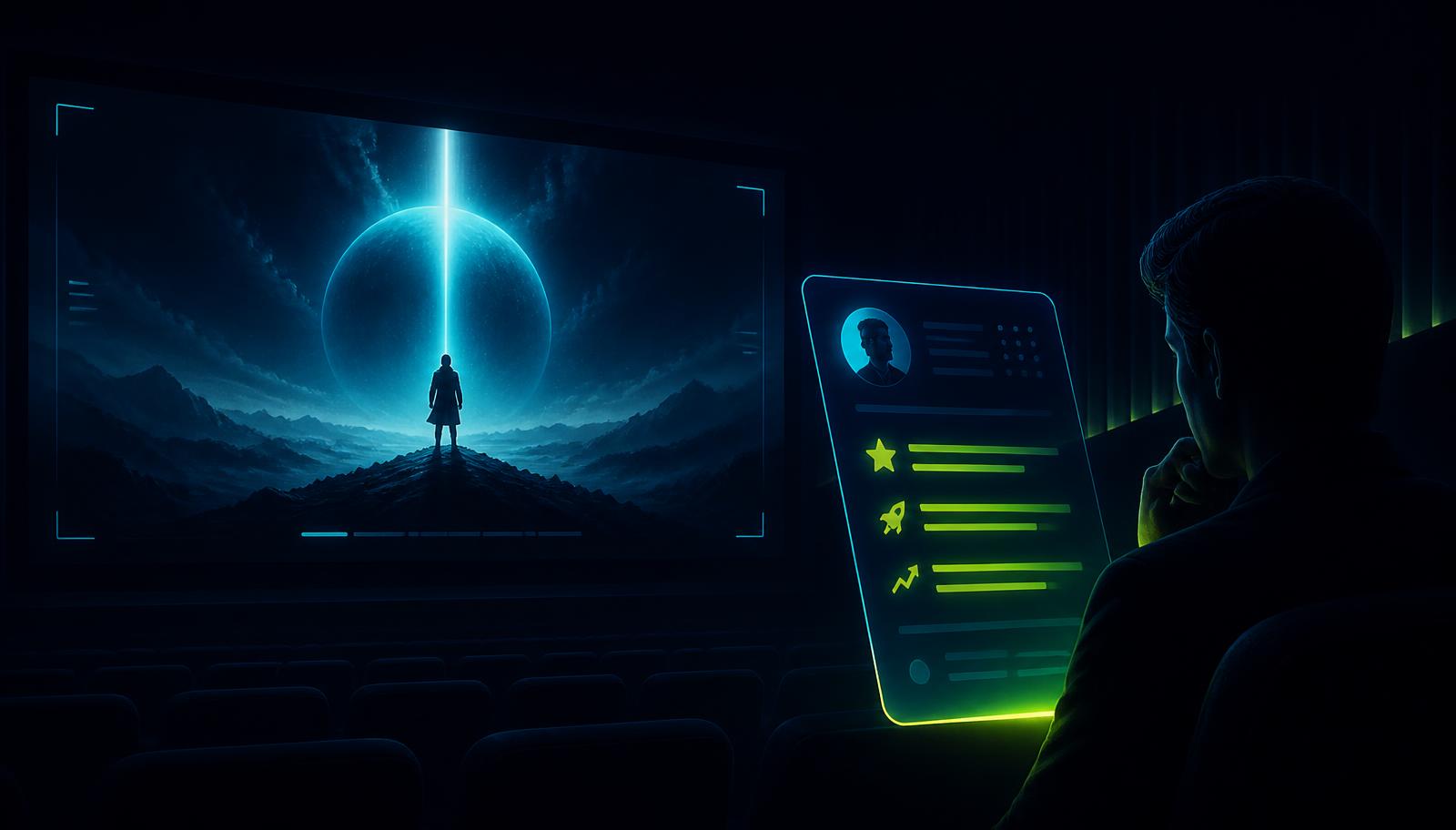
Think about the last time you updated your resume. You opened the document, scrolled through every role, added another responsibility, expanded another bullet point, and squeezed the margins just enough to fit one more achievement.
It feels logical. If you’ve spent years building a career, shouldn’t your resume reflect everything you’ve done? Not exactly — because the purpose of a resume isn’t to tell your entire story. It’s to make someone want to hear it.
A resume is not your career. It’s an invitation to a conversation. And if it tries to answer every possible question before the interview even begins, it’s probably working against you.
Imagine if movie trailers worked like most resumes
You open YouTube. A trailer for the latest blockbuster appears — and instead of showing the most exciting scenes, it starts at the very beginning. Every conversation. Every subplot. Every twist. Every ending. Three hours later you’ve watched the whole movie. Would you buy a ticket?
Probably not, because curiosity disappeared. A great trailer doesn’t explain everything. It gives you enough to understand the story, but not enough to satisfy your curiosity. That’s exactly what a great resume does.
A strong resume gets you into the room; what happens next depends on how well you communicate. That’s why successful candidates pair a focused resume with time spent to
practise behavioural interviews with AI so they’re equally ready for the conversation that follows.
“Your resume isn’t the movie. It’s the trailer.”
A resume is read very quickly — recruiters scan, they don’t read
Here is the short answer: a resume is read very quickly. The first pass is measured in seconds, not minutes, and it is a scan rather than a read. A recruiter is looking for signals — patterns, evidence, momentum, relevance — before deciding whether the document earns a slower second look.
One of the biggest misconceptions in job searching is that recruiters read every resume top to bottom. Most don’t, at least not initially. They scan for signals: patterns, evidence, momentum, relevance.
They’re asking simple questions. Does this person appear qualified? Is their experience relevant? Can I quickly understand what they do? Is this worth exploring further?
That is why the top third of the page carries most of the weight, why one clear line of positioning beats four dense bullets, and why numbers are easier to scan than adjectives. Write for the fast pass first; the detailed read only happens if the fast pass goes well.
Notice what’s missing: they aren’t trying to understand every detail of your career. They’re deciding whether your career deserves thirty minutes of their time. Your resume isn’t trying to close the sale — it’s trying to earn the meeting.
The resume has only one job
Candidates believe resumes have dozens of jobs: explain experience, show personality, demonstrate leadership, describe projects, highlight technical skills, list certifications, include keywords.
All of that matters, but it’s secondary. The primary job is remarkably simple: move the recruiter to the next step. If your resume earns an interview, it succeeded — even if it never explained every accomplishment you’ve ever had.
Why smart people write weak resumes
Ironically, experienced professionals often create the weakest resumes — because they know too much. Ask a software architect, a marketing director or an engineering manager to summarise ten years of work and everything feels important.
So they include all of it. The result is information overload. When everything is important, nothing stands out.
Adding more bullet points doesn’t reliably increase your chances; sometimes it decreases them. In a bookstore, “The Psychology of Decision Making” gets picked up more often than “Everything That Has Ever Happened in Human Decision Making Throughout Recorded History.” Not because it contains less value, but because it promises clarity. Clarity beats completeness, every time.
“When everything is important, nothing stands out.”
The best bullet points create questions
Compare two versions. Resume A: “Responsible for managing cross-functional stakeholders across multiple departments while leading digital transformation initiatives that resulted in process optimisation and improved customer satisfaction.” Technically correct. Impossible to visualise.
Resume B: “Led the redesign of an onboarding process that reduced customer activation time from 12 days to 3.” Immediately, questions appear. How? Why? What changed? How many customers? What did they personally do?
Those questions are valuable — interviews exist to answer them. Specificity also builds credibility and creates mental anchors. “Improved customer experience” blends into the pile; “reduced first-response time from 48 hours to under six” is remembered fifty resumes later.
Your resume is marketing, not documentation
This makes some people uncomfortable. Shouldn’t resumes simply present facts? Absolutely — but marketing isn’t the opposite of truth. Marketing is deciding which truthful facts deserve attention first.
Apple doesn’t open a product launch by listing internal components; they start with the benefit. Trailers don’t show every scene; they show the scenes that create anticipation. Lead with the moments that best represent your professional value and let the interview fill in the details.
Stop writing job descriptions. Start writing impact stories.
Many resumes read like copied job descriptions: managed a team, attended meetings, created reports, worked with stakeholders, supported customers. Those explain what your job was, not why you were exceptional.
Hiring managers already know what a Product Manager, a Software Engineer or a Financial Analyst does. What they want to know is why your work was different and what changed because you were there. That’s the beginning of an interesting story.
Open ten Product Manager resumes and you’ll read the same phrases: cross-functional collaboration, stakeholder management, agile methodologies, data-driven decision making. All accurate, all nearly meaningless, because they describe categories of work rather than evidence of work. “We cook food” is true; “we serve Neapolitan pizza that takes 72 hours to prepare” is memorable.
Why ATS optimisation isn’t enough
Search for resume advice and you’ll find articles obsessed with Applicant Tracking Systems. Use keywords. Match the job description. Avoid tables. Skip graphics. Those recommendations have real value.
But many candidates optimise for software and forget they’re ultimately writing for people. Passing an ATS filter doesn’t earn an offer — it earns a human review, and humans aren’t impressed by keyword density. They’re impressed by clarity, relevance and impact.
Think of ATS compatibility as getting your foot in the door; your writing is what convinces someone to invite you inside. If you want a quick read on both,
run an ATS readiness check on your resume before you send the next application.
The highlight reel framework
Instead of summarising your entire career, imagine you’re building a highlight reel. Sports broadcasts don’t replay every minute of every game; they show the moments that mattered.
For every role, ask: What problem did I solve that mattered? What achievement would I proudly discuss in an interview? Which accomplishment best represents my abilities? What measurable outcome demonstrates my impact? Which project changed my career?
Those answers belong on your resume. Everything else is supporting context. Then challenge every remaining bullet: “If I removed this, would the recruiter understand me any less?” If not, delete it. Strong resumes aren’t built by adding — they’re built by editing.
“Strong resumes aren’t built by adding. They’re built by editing.”
The best resumes leave room for conversation
Candidates worry that omitting details makes them look less qualified. The opposite is usually true. “Reduced customer churn by 18% after redesigning the onboarding experience” leaves obvious gaps: How? What research informed it? How big was the customer base? What did you personally own?
Those unanswered questions aren’t weaknesses — they’re conversation starters. A strong resume doesn’t eliminate curiosity. It creates it.
Facts matter, accuracy matters, honesty matters — but facts without narrative rarely stick. Recruiters don’t remember twenty responsibilities. They remember one promotion, one launch, one turnaround, one measurable result. We remember stories far better than lists.
The resume-to-interview bridge
Here’s where preparation usually disconnects. Candidates spend days perfecting a resume, then prepare for interviews as if starting from scratch. Instead, treat your resume as Chapter One and the interview as Chapter Two.
Every major achievement should have a deeper story ready behind it. If your resume says “led a global product launch across 12 markets,” be ready to explain why the launch mattered, what obstacles appeared, how decisions were made, what trade-offs existed and what you learned afterwards.
A useful test: cover your name and contact details, hand the resume to someone who doesn’t know you, and ask “What kind of professional do you think this person is?” If their answer matches the impression you wanted, it’s working. If they describe someone generic, your signals need to be stronger.
The Career Gym philosophy
At Uinspyr, we believe careers aren’t built through perfect documents. They’re built through continuous improvement. Your resume matters. Your LinkedIn profile matters. Interview preparation matters. Communication matters. None of them exist in isolation — improving one strengthens the others.
That’s why we treat career growth as training rather than preparation. Athletes don’t train one muscle. Musicians don’t practise one note. The strongest candidates keep improving every stage of the hiring journey — resume, interview, negotiation.
Key takeaways
Your resume is a marketing document — not an autobiography.
The purpose of a resume is to earn an interview, not explain your entire career.
Recruiters scan for relevance, clarity and impact before they read in detail.
Specific achievements create curiosity far more effectively than generic responsibilities.
ATS optimisation matters, but human readability ultimately decides interview invitations.
Think of your resume as the trailer. Save the full story for the interview.
The next time you update your resume, resist the temptation to include everything. Ask a different question instead: “What would make someone want to meet me?”
That’s the purpose of a great resume. Not completeness. Not perfection. Curiosity. Interviews aren’t earned by telling your whole story — they’re earned by giving recruiters a reason to ask for it.
Think like a filmmaker. Build anticipation. Highlight the moments that matter. Leave the audience wanting more.
Your resume gets you the interview. Your communication gets you the offer.
Practise explaining the stories behind your achievements with realistic AI-powered mock interviews and get detailed feedback after every session.
Start your career workout todayWant to know how your resume reads today?
Upload it for an instant ATS readiness check and see which achievements actually stand out.
Frequently asked questions
- How long should a resume be?
- For most professionals, one page is appropriate early in a career, while experienced professionals may use two pages if every section adds meaningful value. Length matters less than clarity and relevance.
- Should I include every responsibility from my previous jobs?
- No. Focus on achievements and impact rather than documenting every responsibility. Recruiters care about what made your work valuable, not an exhaustive task list.
- How can I make my resume stand out?
- Be specific. Replace vague statements with measurable outcomes, concrete examples, and achievements that naturally encourage follow-up questions.
- Is ATS optimisation still important?
- Yes. ATS compatibility helps your resume reach human reviewers. Once it does, clarity, storytelling and relevance matter far more than keyword repetition.
- How should my resume connect to my interview?
- Every major achievement on your resume should have a deeper story behind it. Treat the resume as the introduction and the interview as the chance to explain your experiences in detail.
Related articles
What Recruiters Notice in the First 90 Seconds of Reading Your Resume
Recruiters don’t read resumes first. They make decisions first — and then read to confirm them.
The 6-Second Resume Scan Is Real — But It's Not Reading Your Bullet Points
A candidate spends an hour perfecting one quantified bullet point. Eye-tracking research on real recruiters suggests that bullet isn't what gets looked at first — and knowing what actually is changes how a resume should be built.