Why Interview Preparation Is Broken (And What Actually Works in 2026)
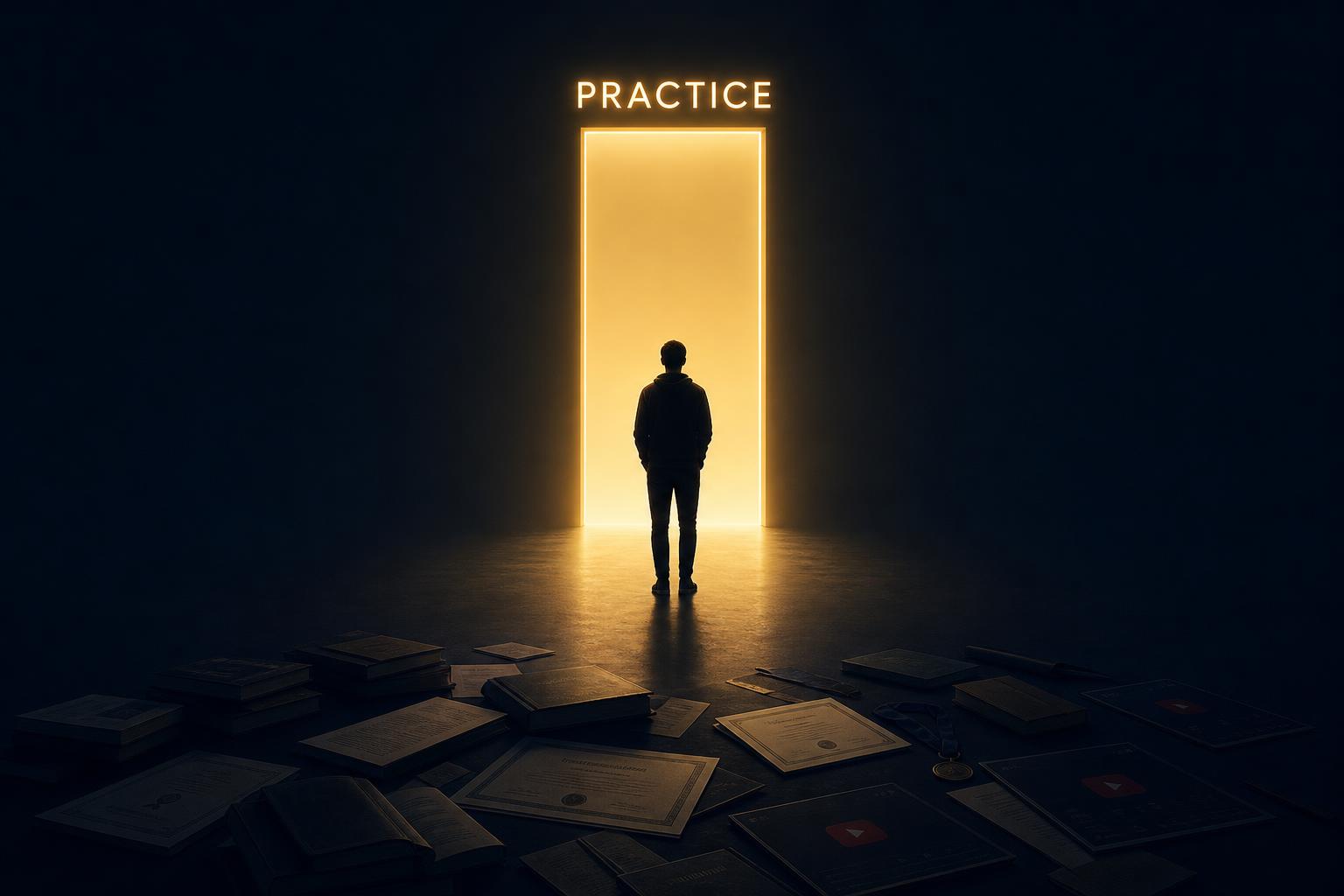
Search YouTube for interview preparation. You'll find thousands of videos. Search Google and you'll find endless articles. Scroll LinkedIn and you'll see interview tips every single day.
Yet millions of talented candidates still walk into interviews feeling nervous, unprepared, and unsure of themselves.
The problem isn't a lack of information. It's that most interview preparation teaches people to consume instead of perform.
Everyone is preparing. Very few are actually training.
Traditional interview preparation looks like this: watch interview videos, read blog posts, memorise STAR answers, save interview question PDFs, highlight important points.
All of these activities feel productive. But none of them actually simulate an interview. You're learning about interviews — not practicing interviews.
The consumption trap
Consumption is comfortable. It gives you the feeling of progress without the discomfort of performance. You bookmark, you highlight, you nod along.
But nobody has ever been hired for how many videos they watched. They get hired for what they can say, decide and demonstrate in a live conversation.
“You're learning about interviews — not practicing interviews.”
Interviews are performance, not memory tests
An interview doesn't ask whether you've read enough. It asks whether you can think, communicate, adapt and stay composed under pressure.
That's a completely different skill. It's the difference between reading about swimming and getting into the water.
Why candidates freeze
Many candidates know the answer after the interview. They replay the conversation and think, “I should have said that.”
That's because knowledge wasn't the problem. Retrieval under pressure was. The brain performs differently when being evaluated — only repeated exposure reduces that pressure.
The myth of confidence
People often say, “Once I'm confident, I'll perform well.” In reality, confidence usually comes after successful repetitions.
Athletes don't wait until they're confident before training. Musicians don't perform after reading sheet music once. Interviews work exactly the same way.
“Confidence is earned through practice, not waited for.”
Deliberate practice changes everything
Research into expert performance consistently shows that improvement comes from deliberate practice: practicing real scenarios, receiving immediate feedback, identifying weaknesses and repeating until improvement becomes measurable.
This cycle is what creates lasting performance gains — in sport, in music, and in interviews.
Why mock interviews matter
Mock interviews recreate the conditions that reading never can. You must organise your thoughts, speak clearly, handle follow-up questions, think under time pressure and adapt your communication.
Every repetition strengthens these skills. We broke this down in detail in
The AI advantage
Traditional mock interviews have limitations — scheduling, availability, cost. AI removes those barriers.
Candidates can now practice every day, receive instant feedback, track improvement over time, focus on weak areas and build confidence through repetition. The result is a preparation process that resembles training rather than studying.
Introducing the Career Gym
At Uinspyr, we believe careers are built the same way fitness is built. Not through reading. Not through motivation. Through reps.
Every interview. Every reflection. Every improvement. Every session makes you stronger. That's why we call Uinspyr an AI-powered Career Gym. Learn more about the idea in
What great interview preparation looks like
An effective preparation plan includes resume refinement, behavioural interview practice, role-specific technical interviews, communication coaching, AI feedback, consistent repetition, progress tracking and reflection after every session.
Preparation should become a habit — not a last-minute activity.
Final thoughts
The internet doesn't need another interview tips article. Candidates don't need more advice. They need more practice.
The future of interview preparation isn't consuming more content. It's building better habits through deliberate, measurable practice. Interview success isn't built overnight — it's built one rep at a time.
“Interviews aren't won by the person who read the most. They're won by the person who practiced the most.”
— Team Uinspyr
Stop Preparing. Start Training.
Upload your resume, practice realistic AI interviews, get instant feedback and track your Career Score. Train like your career depends on it.
Start Training FreeExplore the Career Gym
See how deliberate practice, AI feedback and daily reps compound into real interview confidence.
Frequently asked questions
- Why do most interview preparation methods fail?
- Because they focus on consuming information — videos, articles, sample answers — instead of practicing real interview performance. Interviews test how you think, speak and decide under pressure, and those skills are only built through repeated live practice with feedback.
- Is watching interview videos enough?
- Videos can help build awareness of frameworks and common questions, but they don't replace active practice and feedback. Watching someone answer a question is very different from having to answer it yourself, out loud, under time pressure.
- How often should I practice interviews?
- Consistent practice several times a week is generally more effective than cramming right before an interview. Short, focused sessions of 20–30 minutes with feedback build confidence faster than one long marathon session.
- Can AI really help with interview preparation?
- Yes. AI provides scalable, repeatable interview practice with immediate feedback, making deliberate practice accessible any time. It removes the biggest blockers of traditional mock interviews — scheduling, cost and availability — so you can train daily.
- What is the best interview preparation strategy in 2026?
- Treat interviews like a performance skill. Combine resume refinement, behavioural and role-specific mock interviews, AI feedback, consistent repetition and honest reflection after every session. Preparation should be a habit, not a last-minute activity.
Related articles
Google Interview Warmup Is Retired: What Happened and What Should You Use Instead?
Google Interview Warmup has been retired. Here's what actually happened, what Google recommends now, and why talking to an AI isn't automatically the same as training for an interview.
You Don't Have an Interview Problem. You Have a Practice Problem.
The biggest reason talented people fail interviews has almost nothing to do with knowledge. It has everything to do with reps.