AI Won't Take Your Job. Someone Using AI Will.
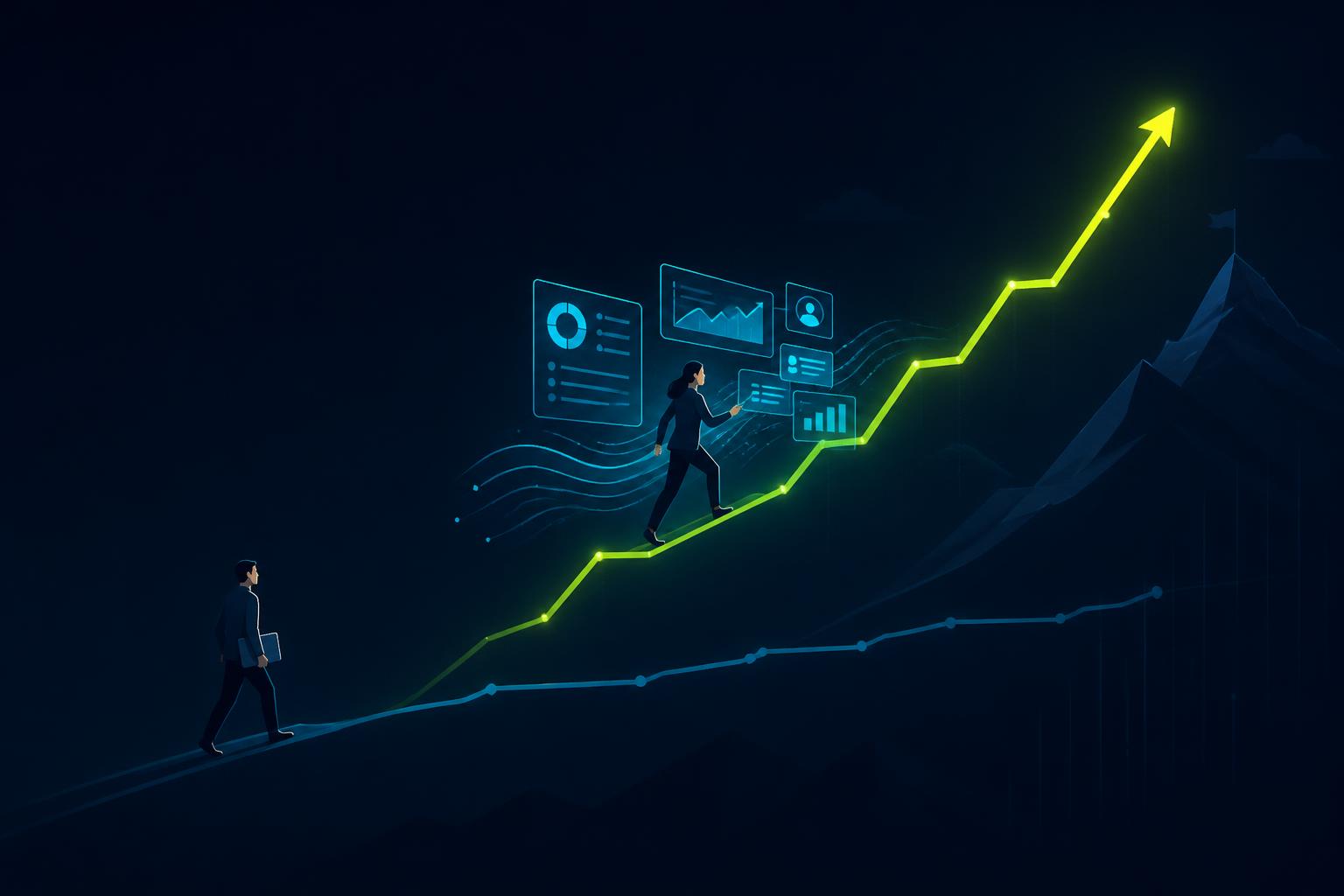
The biggest career shift of this decade isn’t artificial intelligence. It’s amplified human intelligence.
Open LinkedIn. Watch YouTube. Read the headlines. The conversation almost always sounds the same. “Will AI replace software engineers?” “Will ChatGPT eliminate marketing jobs?” “Which careers are safe from AI?”
It’s understandable. People are worried, and every major technological shift creates uncertainty. But these questions miss the bigger story.
We’ve been asking the wrong question
History rarely replaces entire professions overnight. Instead, technology changes who performs better inside those professions.
Think about Excel. When spreadsheets became common, accountants didn’t disappear — the accountants who learned Excel became dramatically more valuable. The same thing happened with the internet, search engines, smartphones and cloud computing. None of them replaced entire industries. They rewarded the people who adapted first.
AI is following the same pattern. The real competition isn’t between humans and artificial intelligence. It’s between professionals who learn to work alongside AI and those who continue working as though nothing has changed.
If you want to experience that shift rather than simply read about it, start your first AI Interview Rep. In a few minutes you’ll see how AI can challenge your thinking, improve your communication, and help you become a stronger professional — not replace you.
“The real competition isn’t humans versus AI. It’s humans with AI versus humans working as though nothing has changed.”
AI is a lever, not a competitor
Imagine two graduates starting the same job. Both are intelligent. Both work hard. Both have similar degrees.
One spends three hours researching a market. The other uses AI to organise the research in thirty minutes. Now they both spend the remaining time thinking. One produced research. The other produced insight.
AI didn’t replace the second graduate. It multiplied their capacity. That’s what leverage looks like. The most valuable professionals of the next decade won’t necessarily know more — they’ll simply be able to accomplish more with the same amount of time.
Every technological revolution rewards the early learners
When email became mainstream, many professionals continued printing messages. When cloud computing arrived, companies resisted. When smartphones entered the workplace, some organisations banned them. Eventually every one of those technologies became normal.
AI will follow the same trajectory. Today’s competitive advantage becomes tomorrow’s baseline. The question isn’t whether AI becomes part of work — it already has. The question is whether you’ll be ahead of that curve or trying to catch it.
The biggest winners won’t be AI experts
This surprises many people. You don’t need to become an AI researcher, or build foundation models, or understand transformer architectures. Most careers won’t reward deep AI engineering knowledge.
They’ll reward something much simpler. Knowing how to ask better questions. Knowing how to evaluate AI-generated work. Knowing when to trust AI, and when not to. Knowing how to combine human judgment with machine speed.
Those are very different skills. And they’re accessible to almost everyone.
AI makes human skills more valuable
Many people assume AI reduces the importance of communication. The opposite is happening.
If everyone can generate a report, who gets promoted? The person who explains the report clearly. If everyone can create a presentation, who leads the meeting? The person who makes decisions. If everyone can summarise research, who influences strategy? The person with judgment.
Technology consistently automates routine work, and that makes uniquely human skills even more valuable. Communication. Leadership. Curiosity. Empathy. Decision-making. Adaptability. These aren’t becoming obsolete — they’re becoming the competitive advantage.
Why students should pay attention
If you’re still at university, you’re entering one of the most fascinating job markets in history.
The graduates who simply memorise information will compete against AI. The graduates who learn to collaborate with AI will compete on something far more valuable: original thinking, problem solving, communication and learning speed. That’s a fundamentally different career strategy.
AI doesn’t eliminate practice. It makes practice more important
Some people worry AI means they no longer need to develop skills. Actually, the opposite is true.
Because AI accelerates execution, the quality of your thinking becomes even more visible. Anyone can ask AI to write an answer; fewer people can recognise whether the answer is actually good. Anyone can generate interview responses; fewer people can communicate those ideas naturally in a real conversation.
That’s why practising communication is becoming more — not less — important in an AI-first world.
The Career Gym era
For decades, careers rewarded knowledge. Today, knowledge is increasingly available on demand. Tomorrow, careers will reward the ability to apply knowledge effectively.
That’s exactly why Uinspyr exists. Not to help you memorise answers. Not to help you sound robotic. But to help you think more clearly, communicate more effectively, and improve through deliberate repetitions. That’s the difference between information and performance.
The AI amplification framework
One of the biggest mistakes professionals make is thinking AI creates value on its own. It doesn’t. AI amplifies whatever already exists.
If your thinking is unclear, AI produces unclear work faster. If your prompts are vague, AI produces vague answers faster. If your judgment is weak, you’ll confidently ship poor decisions at record speed.
But if you’re curious, structured and thoughtful, AI becomes an extraordinary force multiplier. That’s the difference between using AI and working with AI.
Think of it like a calculator. A calculator doesn’t make someone a mathematician — it removes the mechanical work so they can focus on solving better problems. AI is becoming the calculator for knowledge work.
“AI amplifies whatever already exists. Unclear thinking simply becomes unclear work, faster.”
The professionals who will thrive
As AI becomes part of everyday work, you’ll notice two very different kinds of professionals. Professional A uses AI to finish work faster. Professional B uses AI to think better.
The first saves time. The second creates value. One is optimising execution; the other is improving decision-making. Companies don’t build competitive advantages through faster typing. They build them through better thinking.
The new career stack
For years, career growth followed a familiar formula: knowledge, experience, communication. That stack is changing.
Tomorrow’s strongest professionals will combine four capabilities. Domain knowledge — you still need to understand your field. AI fluency — knowing what AI can and can’t do. Judgment — deciding whether AI’s output is actually useful. Communication — turning ideas into influence.
Miss any one of those four and your career becomes harder. Master all four and you become remarkably difficult to replace.
AI doesn’t remove interviews. It changes them
Some candidates assume AI-generated resumes and cover letters mean interviews matter less. The opposite is happening. As AI makes written applications easier, interviews become more important.
Why? Because companies still need to answer one question: can this person actually think?
AI can help you prepare, research and structure ideas. But it can’t attend the interview for you. It can’t build trust. It can’t replace your judgment. It can’t create genuine human connection. That’s why communication becomes one of the highest-leverage skills in an AI-first economy.
That shift has become literal enough that it now shows up as its own interview question — a growing share of loops now ask candidates directly how they personally use AI in their work, and score the answer on judgment, not on which tool gets named.
The new competitive advantage
Imagine two graduates applying for the same role. Both use AI. Both have polished resumes. Both arrive well prepared. What separates them?
One speaks in memorised answers; the other demonstrates curiosity. One repeats frameworks; the other explains trade-offs. One describes what happened; the other explains why decisions were made.
In a world where everyone has access to the same AI tools, the competitive advantage shifts toward thinking. Not typing.
AI rewards curiosity
One of the most underrated career skills is asking better questions, and AI makes that skill dramatically more valuable. The quality of AI output often depends on the quality of human input.
Curious people naturally ask: “What assumptions are we making?” “What are we missing?” “What’s another way to approach this?” “What evidence supports this conclusion?”
Those aren’t AI skills. They’re thinking skills. AI simply magnifies them.
Why repetition matters even more
This is where many people misunderstand the future of work. They assume AI reduces the need for practice. Actually, it raises the bar.
Because routine tasks become easier, higher-order skills become more visible: communication, decision-making, leadership, adaptability, professional judgment. Those aren’t developed by reading. They’re developed by doing. Again. And again.
That’s why interview reps, presentation reps, negotiation reps and communication reps become even more valuable. The professionals who improve continuously will widen the gap every year.
The Career Gym philosophy
At Uinspyr, we don’t believe AI should replace your growth. We believe it should accelerate it. That’s a very different philosophy.
AI shouldn’t become your crutch. It should become your coach. A coach doesn’t play the game for you — a coach helps you perform better.
Every interview rep, every piece of feedback, every communication exercise, every reflection: they’re all repetitions. Repetitions build capability. Capability builds confidence. Confidence creates opportunities. That’s how careers compound.
Key takeaways: AI is a force multiplier, not a replacement for human capability; the future belongs to professionals who combine AI fluency with strong judgment; communication becomes more valuable, not less, as AI adoption increases; AI-generated work still requires human evaluation, context and decision-making; continuous practice creates a long-term competitive advantage in an AI-first world; and AI works best as a coach that accelerates your growth, not a substitute for it.
The future isn’t humans versus AI. It’s humans with AI versus humans without it. But even that sentence isn’t the whole story — the biggest winners won’t simply use AI. They’ll use AI while continuing to develop the skills machines can’t easily replicate: judgment, empathy, communication, creativity, leadership, resilience.
Those qualities have always mattered. AI makes them even more valuable. So don’t spend your energy asking, “Will AI replace me?” Ask a much better question: “How can AI make me more capable than I was yesterday?”
That’s the question that will shape careers over the next decade. And the people who answer it well won’t just survive the AI era. They’ll define it.
Your competitive advantage isn’t AI. It’s how you use it.
Don’t just read about the future of work — experience it. Start your first AI Interview Rep and see how deliberate practice, real-time AI feedback and consistent repetition make you a stronger communicator, thinker and professional.
Start your first AI Interview RepWant the complete preparation journey?
Explore the full Interview Prep experience after your first few reps.
Frequently asked questions
- Will AI replace most jobs?
- AI is likely to automate many tasks within jobs rather than eliminate entire professions. Historically, technology has changed how people work more often than it has removed occupations entirely. Professionals who adapt tend to benefit the most.
- What skills will matter most in an AI-driven workplace?
- Communication, judgment, problem-solving, adaptability, leadership and AI fluency are becoming increasingly important because they complement what AI does well rather than compete with it.
- Should students learn AI tools?
- Yes. Understanding how to work effectively with AI is becoming a valuable career skill across many industries. Equally important is learning to evaluate AI output critically and communicate ideas clearly.
- Why are interviews still important if everyone uses AI?
- AI can help candidates prepare, but interviews remain one of the best ways for employers to evaluate judgment, communication, collaboration and authenticity — qualities that are difficult to assess through documents alone.
- How can I prepare for an AI-first job market?
- Develop strong fundamentals in your chosen field, become comfortable using AI tools responsibly, improve your communication skills, and practise explaining your thinking under realistic conditions.
Related articles
Is Using AI During a Job Interview Cheating? What Hiring Managers Actually Catch
Nearly half of hiring managers say they've caught a candidate using AI to answer questions live. Nearly a quarter of candidates admit to doing it. Here's the real difference between preparing with AI and getting cut for leaning on it in the room.
“How Do You Use AI?” Is Now a Real Interview Question — Here’s What a Good Answer Sounds Like
A growing share of interview loops now include one blunt question: how do you actually use AI? Most candidates answer with a tool name. The interviewer is scoring something else entirely.